
Article Overview
The H₂S scrubbing process is a critical method for removing hydrogen sulfide from gas streams in oil and gas operations. It plays a key role in protecting workers, maintaining equipment integrity, and meeting regulatory requirements. This article explains how H₂S scrubbing systems function in real field conditions, the different system types available, and when scrubbing is the most effective solution compared to chemical or alternative treatment methods.
What Is The H₂S Scrubbing Process and Why Is It Used?
The H₂S scrubbing process is a chemical treatment method used to remove hydrogen sulfide from gas streams before they are released, flared, or transported. In upstream and midstream operations, H₂S is commonly found in produced gas and can present immediate safety risks if not properly controlled.
Scrubbing systems work by bringing the gas stream into contact with a treatment solution or media that absorbs or reacts with H₂S. This allows operators to reduce H₂S concentrations to acceptable levels before the gas moves further through the system. Unlike some chemical injection methods, scrubbing is typically applied at specific control points where gas is being vented, processed, or handled in concentrated volumes.
For many operations, the H₂S scrubbing process is essential because it provides a controlled and measurable way to manage emissions while supporting safe and compliant operations.
How Does The H₂S Scrubbing Process Work In The Field?
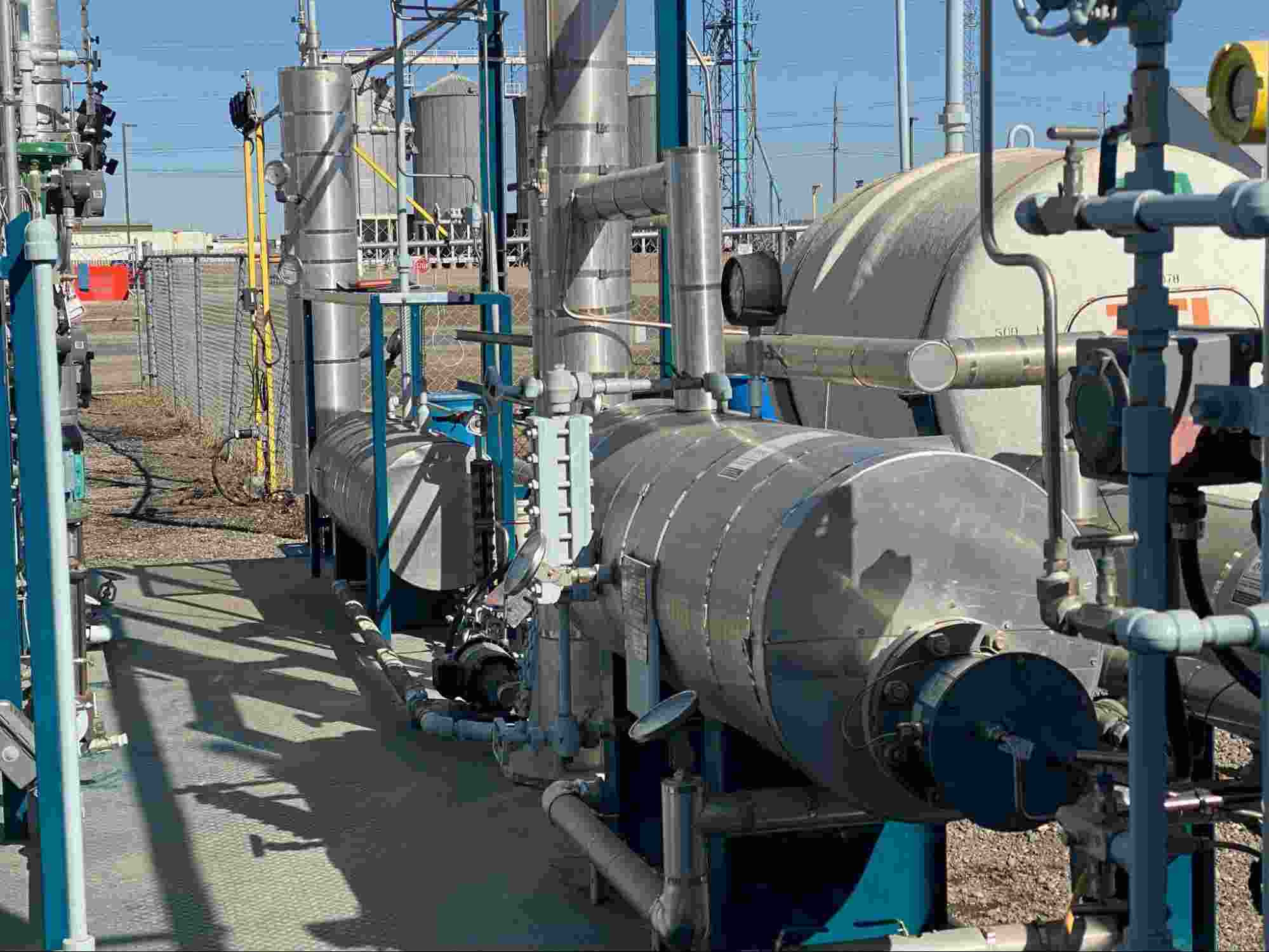
The H₂S scrubbing process follows a straightforward but highly engineered flow. Gas containing H₂S enters a scrubber vessel where it is exposed to a treatment solution or packed media designed to capture or neutralize H₂S.
As the gas moves through the system, contact time and surface area are critical. The design of the scrubber ensures that the gas remains in contact with the treatment medium long enough for the H₂S to be absorbed or chemically converted. The treated gas then exits the system with significantly reduced H₂S content.
While designs vary depending on the application, most field systems include:
● An inlet section to distribute sour gas evenly
● A contact zone where H₂S removal takes place
● Internal components such as trays or packing to increase efficiency
● A treated gas outlet for safe discharge or further processing
● Monitoring points to verify performance and compliance
This controlled process allows operators to manage emissions at key points such as tank vents, separators, and compressor systems where H₂S release is most likely.
What Types of H₂S Scrubbing Are Used
Several types of systems are used depending on pressure, flow rate, and site conditions. High pressure scrubbers are typically used in gas processing or pipeline applications where large volumes of gas must be treated continuously. Low pressure or atmospheric systems are often used at tank batteries, storage facilities, and temporary setups.
Dry media scrubbers rely on solid materials that react with H₂S, making them suitable for applications with moderate flow rates and predictable conditions. Liquid-based scrubbers use circulating solutions that absorb H₂S and can be adjusted based on loading rates.
In many field situations, system selection comes down to how variable the gas stream is and how quickly conditions can change. Operators working in dynamic environments often require systems that can handle fluctuations without sacrificing performance.
For operations comparing available system configurations, reviewing H₂S removal from oil solutions can provide insight into how different treatment approaches are applied across real field conditions.
Factors That Influence H₂S Scrubber Performance
No two production sites operate under identical conditions, which is why H₂S scrubber performance depends on more than simply selecting the right equipment. Gas composition, operating pressure, temperature, flow fluctuations, and expected H₂S loading all influence how efficiently a system performs over time. A scrubber designed for steady, predictable gas production may require different sizing or media capacity than one installed at a facility with frequent production changes.
Routine monitoring also plays an important role in maintaining removal efficiency. Tracking inlet and outlet H₂S concentrations, differential pressure, and treatment media condition allows operators to identify performance changes before they affect compliance or production. Preventive maintenance and scheduled media replacement help extend equipment life while minimizing unexpected downtime.
By evaluating operating conditions during system design and continuing to monitor performance throughout the equipment’s service life, operators can improve reliability, reduce operating costs, and maintain consistent H₂S control even as field conditions evolve.
Operating Factor | Why It Matters | Operational Consideration |
| H₂S Concentration | Determines treatment capacity requirements | Higher concentrations may require larger or multi-stage systems |
| Gas Flow Rate | Affects contact time inside the scrubber | Rapid flow changes may require flexible system sizing |
| Operating Pressure | Influences equipment design and efficiency | Pressure ratings must match field conditions |
| Temperature | Can impact treatment media performance | Systems should be selected for expected temperature ranges |
| Maintenance Schedule | Helps sustain removal efficiency | Regular inspections and media replacement reduce performance loss |
When Is The H₂S Scrubbing Process the Right Solution?
The H₂S scrubbing process is most effective when gas phase H₂S needs to be controlled at a defined point in the system. This typically includes vent gas from storage tanks, flash gas from separators, and emissions during maintenance or turnaround work where release points are predictable.
Scrubbing is often selected in situations where gas volumes are concentrated, continuous treatment is required, and emissions must meet strict regulatory or site-specific limits. It is also a practical option when chemical injection into liquids is not effective or when operators need a contained system that allows for consistent monitoring and performance verification.
In these conditions, scrubbing provides a reliable and measurable way to manage H₂S without relying on dilution or temporary controls, helping operators maintain compliance and operational stability.
How Does Scrubbing Compare to Other H₂S Treatment Methods?
The choice between scrubbing an d other treatment methods depends on where H₂S is present and how it behaves in the system. Chemical scavengers are often used in liquid streams such as crude oil, where H₂S is dissolved and needs to be treated before transport or storage.
Scrubbing, on the other hand, focuses on gas phase treatment. It is designed to capture H₂S after it has been released from the liquid phase or when it exists primarily in the gas stream. This makes it especially useful for managing emissions at vent points and during handling operations.
In many cases, the most effective approach combines both strategies. Operators may treat oil with scavengers while also using scrubbers to control vapor phase H₂S. This integrated approach ensures that both liquid and gas phase risks are addressed across the full operation. For sites managing both phases, exploring chemical solutions can help align treatment strategies across the entire system.
What Should Operators Understand About the H₂S Scrubbing Process?
The H₂S scrubbing process should be viewed as a targeted control solution within a broader emissions management strategy. It is not just about installing equipment but about understanding where H₂S is released and how best to capture it before it creates a safety or compliance issue.
When applied correctly, scrubbing systems provide consistent performance, measurable results, and reliable protection for both personnel and equipment. They are particularly valuable in operations where gas handling points create ongoing exposure risks.
When the H₂S scrubbing process is selected and managed correctly, it helps reduce risk, protect personnel, and maintain safe, compliant gas handling across field operations. For operators managing sour gas in real-world conditions, the right scrubbing system can simplify compliance and improve overall operational control. AMGAS can help you implement a solution that fits your system and performs where it matters most. Use the form below to contact our team and discuss a reliable H₂S scrubbing solution for your operation.